русский
 English
 français
 Deutsch
 italiano
 español
 português
 العربية
 Nederlands
 한국의
한국의 Romania
 Bulgaria
 Melayu

Во многих проектах в химической, металлургической, электронной промышленности, производстве современных материалов и очистке сточных вод конечным продуктом является не просто вода с высокой соленостью. Это концентрат, содержащий потенциально пригодные для использования соли, такие как хлориды, сульфаты и соли органических кислот. Традиционные методы выпаривания и кристаллизации позволяют отделить соли от воды, но они не обязательно отвечают на вопрос о возможности повторного использования этих отработанных солей.
Ценность биполярный мембранный электродиализ Его преимущество заключается в способности использовать биполярно-мембранный интерфейс под действием электрического поля постоянного тока для стимулирования диссоциации воды и раздельного образования H⁺ и OH⁻. Вместе с катион- и анион-селективностью. электродиализная мембрана Благодаря слоям, контролирующим миграцию ионов, мембранный блок преобразует солевой раствор в соответствующие потоки кислоты и щелочи. В некоторых системах с хлоридами и солями, например, могут быть сформированы кислотные и щелочные отсеки для создания пути от высокосоленой сточной жидкости к пригодным для повторного использования химическим веществам.
Ключевым моментом является не прямое электролиз воды с образованием кислоты и щелочи. Расщепление солей происходит в результате совокупного воздействия миграции ионов, селективности мембраны и диссоциации воды. Таким образом, материалы мембраны, состав исходной соли и уровень примесей напрямую влияют на чистоту конечного продукта и эффективность по току.
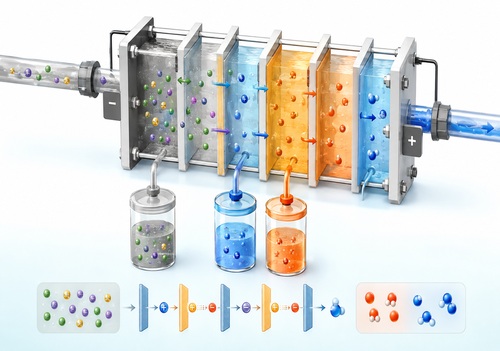
В промышленных электродиализных установках с биполярными мембранами могут использоваться двухкамерные, трехкамерные или другие комбинированные конфигурации. В типичной трехкамерной конструкции повторяющийся блок мембраны состоит из биполярной мембраны, катион-селективной электродиализной мембраны и анион-селективной электродиализной мембраны, образуя солевые, кислотные и щелочные отсеки.
Под действием электрического поля катионы в солевом отсеке мигрируют к катоду и попадают в щелочной отсек, где соединяются с OH⁻, образующимися под действием биполярной мембраны. Анионы мигрируют к аноду и попадают в кислотный отсек, где соединяются с H⁺. По мере продолжения циркуляции концентрация соли снижается, а концентрации кислоты и щелочи повышаются.
Эффективность процесса извлечения определяется селективностью электродиализа мембраны, электрическим сопротивлением, устойчивостью к кислотам и щелочам, а также устойчивостью к загрязнению, равно как и соответствием расстояния между мембранами, скорости потока, плотности тока и концентрации рециркулирующего раствора. Сложные промышленные потоки солей обычно требуют предварительной обработки, такой как фильтрация, удаление жесткости, удаление ионов металлов или органических веществ, чтобы предотвратить накопление Ca²⁺, Mg²⁺, Fe³⁺, кремнезема или коллоидов на поверхности мембран, что может привести к увеличению перепада давления, загрязнению или необратимой потере производительности.
Не все сточные воды с высокой соленостью могут напрямую поступать в систему биполярного мембранного электродиализа. Более перспективными обычно являются сточные воды с определенным ионно-солевым составом и кислотным или щелочным продуктом, имеющим внутреннюю ценность для повторного использования или внешнюю рыночную ценность. Расщепление неорганических солей, подкисление отдельных органических солей, регенерация кислотных и щелочных растворов для регенерации, а также извлечение ресурсов из некоторых маточных растворов гидрометаллургических или тонкохимических производств — все это может быть потенциальным применением.
Оценка целесообразности должна, как минимум, определить основные ионы, концентрацию солей, целевую концентрацию кислот и щелочей, соотношение примесей и ионов, ХПК, взвешенные твердые частицы, жесткость и требуемую чистоту продукта. Большое количество неионогенных органических веществ, трудноразделяемые комплексы или множество сильно конкурирующих ионов могут привести к переносу продукта, недостаточной чистоте кислот и щелочей или чрезмерному удельному потреблению энергии, даже если система может работать.
Поэтому инженерные решения не должны ограничиваться вопросом о возможности производства кислот и щелочей. Необходимо оценивать в совокупности такие параметры, как степень извлечения кислот и щелочей, эффективность тока, поток через мембрану, миграция примесей, удельное энергопотребление и затраты на последующую концентрацию.
В пределах электродиализ водоподготовкаТрадиционный электродиализ и реверсивный электродиализ часто обсуждаются наряду с биполярными мембранными системами, но эти технические методы предназначены для решения разных проблем. Реверсивный электродиализ (РЭД) периодически меняет полярность электродов и переключает функции каналов разбавления и концентрирования, снижая вероятность того, что определенные отложения, образующие накипь, останутся на поверхности мембран в течение длительного времени. Он чаще используется для опреснения, концентрирования и стабильной работы в сложных условиях подачи воды.
При проектировании оборудования для реверсивного электродиализа обычно основное внимание уделяется контролю обратной полярности, переключению путей потока, восстановлению очистки и долговременной устойчивости к образованию накипи. В отличие от этого, основной целью биполярного мембранного электродиализа является расщепление солей и производство кислот/щелочей, при этом сама биполярная мембрана играет решающую роль в генерации H⁺/OH⁻.
Обе технологии основаны на материалах электродиализа и миграции ионов под действием электрического поля, но одна в основном предназначена для опреснения воды и обеспечения стабильной работы, а другая — для извлечения солевых ресурсов и производства химических веществ. Если основной целью является снижение содержания растворенных солей в воде, сначала следует оценить электродиализ (ЭД) или электродиализ (ЭДР). Если же целью является преобразование солей в кислоту и щелочь, следует оценить биодиализационную мембранную очистку (БДЭО), а не просто ожидать, что система ЭДР выполнит ту же функцию.
Успешность внедрения биполярного мембранного электродиализа часто зависит от того, насколько точно определены критические рабочие параметры на ранних этапах тестирования. Бренд Rubri компании Hefei Sinopower Technologies Co., Ltd. предлагает решения в области электродиализа, электродиализа с мембранами и биполярных мембран через свой сайт hfsinopower.com.
Для реального проекта предпочтительное техническое обсуждение начинается с полных данных о качестве воды, основного солевого состава, производительности очистки, целевого типа и концентрации кислот и щелочей, допустимого уровня примесей, времени работы и предполагаемого использования получаемых продуктов. Затем эти данные используются для выбора типа мембран, конструкции блока, количества ступеней, схемы циркуляции и предварительной обработки.
Для сложных технологических процессов, высоких требований к чистоте продукта или планов прямого масштабирования необходимо проводить стендовые или пилотные испытания. Регистрируйте напряжение, ток, тенденции изменения концентрации кислоты и щелочи, удаление солей, эффективность по току, энергопотребление, падение давления в мембранном блоке и эффективность очистки. Максимальная концентрация кислоты или щелочи не обязательно является наилучшим результатом; реальная цель – достижение долгосрочного баланса между сроком службы мембраны, чистотой продукта, эффективностью очистки, удельным энергопотреблением и затратами на последующую обработку.
1. Можно ли повторно использовать регенерированные кислоты и щелочи непосредственно в производстве?
Это зависит от состава исходной соли и требуемой чистоты продукта. При низком содержании примесей в исходном сырье, ограниченном количестве конкурирующих ионов, а также при хорошо контролируемой селективности мембраны и условиях эксплуатации, полученные потоки могут иметь высокую ценность для повторного использования. В химической промышленности (электроника, фармацевтика) и других областях применения высокочистых продуктов может потребоваться дополнительная очистка или концентрирование. Сначала определите предполагаемый этап повторного использования, а затем двигайтесь в обратном направлении к допустимым пределам содержания примесей.
2. Всегда ли более высокая концентрация кислоты или щелочи лучше?
Не обязательно. По мере повышения концентрации кислоты и щелочи изменяются также градиенты концентрации, электрическое сопротивление, обратная диффузия и перенос воды через мембрану. Эффективность по току может снижаться, а удельное энергопотребление — расти. Поэтому при проектировании обычно ставится цель достижения экономического оптимума, а не максимально возможной конечной концентрации. Если требуется более высокая конечная концентрация, мембранное разделение можно комбинировать с испарением или другим процессом концентрирования.
3. Почему для некоторых проектов требуется предварительное пилотное тестирование?
В реальных промышленных отходах часто содержатся соли кальция, магния, железа, кремнезема, органических веществ или множества сосуществующих ионов. Эти примеси влияют на загрязнение мембран, ионную селективность и чистоту продукта. Теоретическая формула соли не может точно предсказать долговременные эксплуатационные характеристики. Пилотные испытания позволяют подтвердить выбор мембраны, рабочий ток, степень извлечения, стратегию очистки и качество кислот/щелочей, обеспечивая более надежные параметры проектирования для масштабирования.
4. Каковы основные эксплуатационные расходы биполярной мембранной системы?
Обычно они включают в себя электроэнергию, мощность циркуляционного насоса, амортизацию или замену мембранного блока, химикаты для предварительной обработки, очистку и техническое обслуживание, а также любую необходимую концентрацию или очистку на последующих этапах. При сравнении предложений поставщиков следует учитывать не только цену системы: запросите проектные параметры исходной воды, рабочую точку, энергопотребление на единицу продукции, предположения о сроке службы мембран и спецификацию качества кислотных/щелочных продуктов, чтобы оценить стоимость жизненного цикла.



 IPv6 ПОДДЕРЖИВАЕМАЯ СЕТЬ